Author: Rabi Raj | 25-Jun-2026
"Forest was our school. We learned everything there. Today, children go to school, but many no longer know the forest."
The elderly Korwa man paused for a moment after saying this. We were sitting outside his house in a small settlement in the Garhwa district of Jharkhand. Around us stood a very few traditional Kumbas, the community's distinctive dwellings made from bamboo, mud, grass, and leaves. Beyond the settlement lay patches of forest that had shaped generations of Korwa life.
His words stayed with me long after I left the village.
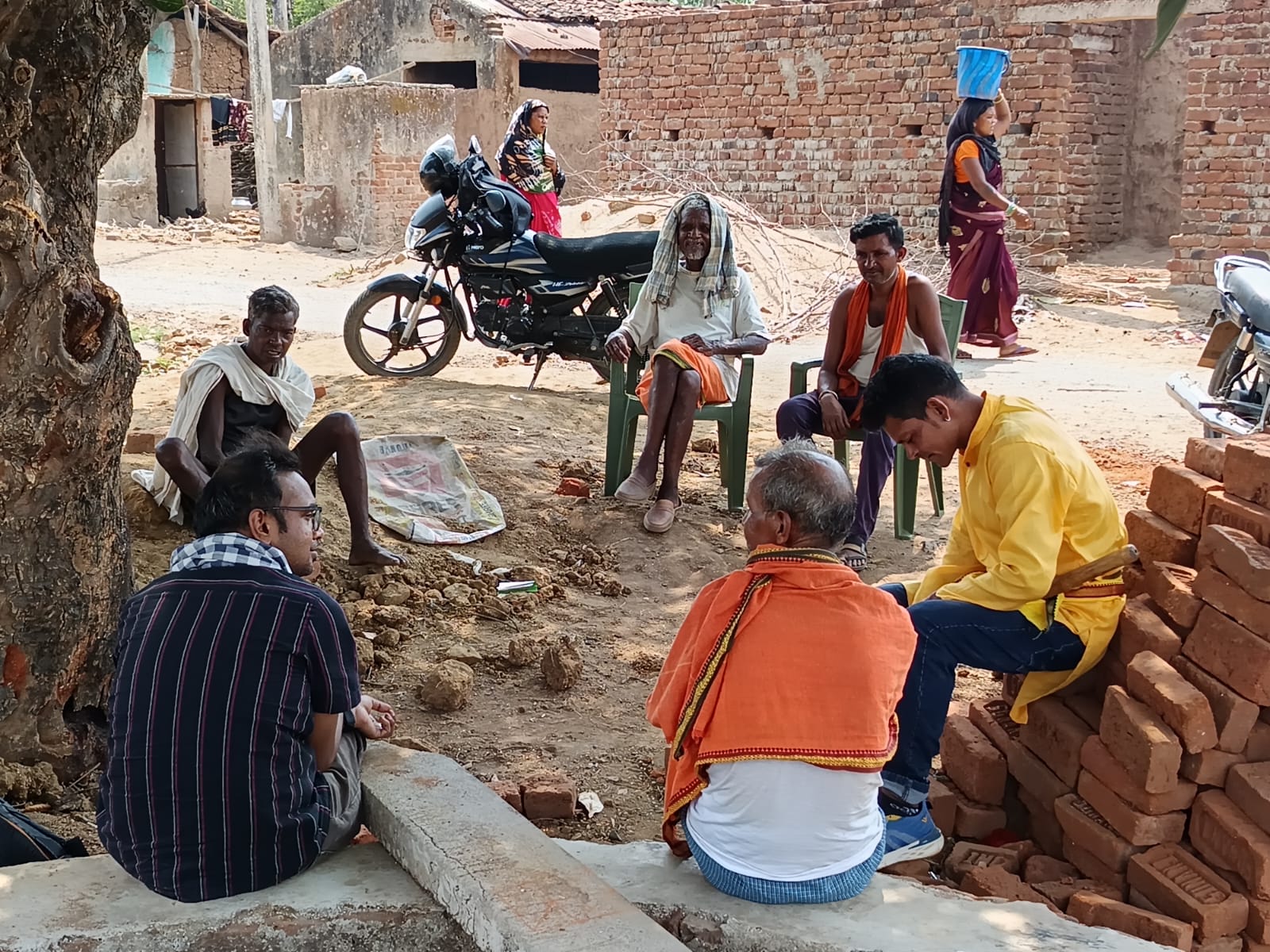
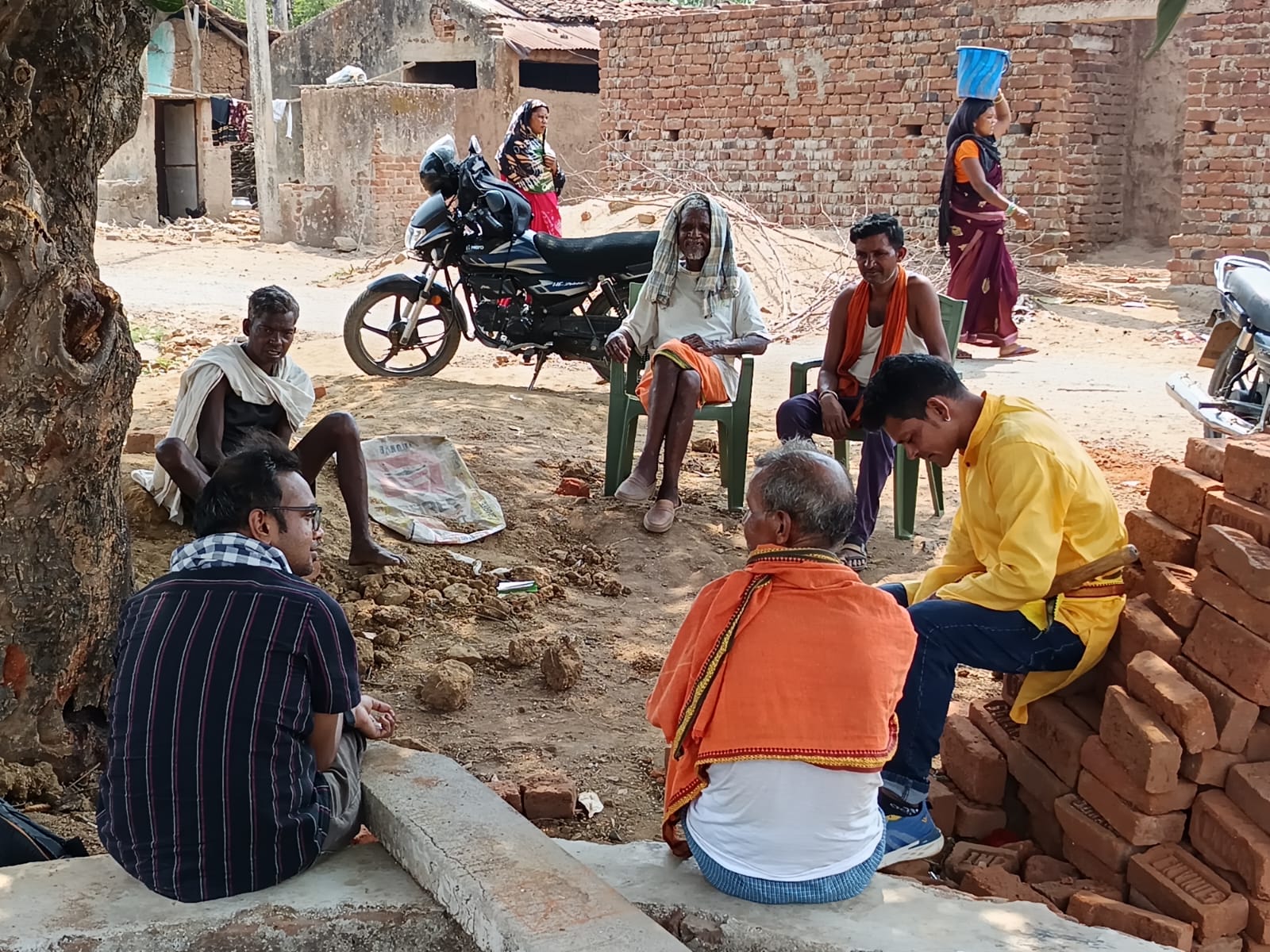
Photo 1: Conversations with Korwa community members in Garhwa district. These dialogues offered valuable insights into changing livelihoods, aspirations, education, and the evolving relationship between communities, forests, and local knowledge systems.
Development discussions often focus on visible changes: roads, houses, schools, electricity, mobile phones, and welfare schemes. These are important markers of progress and have undoubtedly improved the lives of many communities. Yet, during my interactions with the Korwa community, I was reminded that another story of change often remains unnoticed. It is the story of changing relationships with forests, land, knowledge, culture, and community institutions.
Understanding this transformation requires us to look beyond conventional development indicators and pay attention to how communities experience change in their everyday lives.
The Forest as a Living Classroom
For the Korwa community, the forest has never been merely a source of timber or income. It has historically been a classroom, a pharmacy, a marketplace, a food basket, and a cultural landscape.
Knowledge was learned not through formal instruction but through participation. Children accompanied elders into forests, learning to identify medicinal plants, edible roots, seasonal fruits, bamboo species, animal behaviour, and weather patterns. Skills were transmitted through observation, practice, storytelling, and lived experience.
In many Indigenous communities, learning is embedded within everyday life. The boundaries between education, livelihood, culture, and ecology are often blurred. Knowledge emerges through relationships with people, place, and nature.
Several community members spoke about how this relationship has changed over time. Access to forests has become more restricted, livelihood patterns have diversified, and younger generations increasingly spend their time within formal education systems or aspire to opportunities beyond the village.
These changes have created new possibilities. At the same time, they have altered the pathways through which traditional knowledge is transmitted.
Changing Livelihoods, Changing Aspirations
Historically, Korwa livelihoods depended significantly on forests, subsistence agriculture, the collection of minor forest produce, and seasonal labour. Today, these practices coexist with government welfare programmes, wage labour, migration, and aspirations for formal employment. Many young people spoke of education as a pathway towards a different future. Families expressed hopes that their children would secure government jobs, pursue higher education, or find opportunities in urban centres.
Such aspirations are understandable and important.
However, they also raise important questions. What happens when traditional knowledge systems are no longer seen as valuable forms of knowledge? What happens when younger generations increasingly view success through frameworks that are disconnected from their cultural and ecological heritage?
The issue is not that communities should remain unchanged. Every society evolves. The challenge lies in ensuring that development does not unintentionally contribute to the erosion of valuable knowledge systems that have enabled communities to survive and adapt for generations.
From Kumba to Concrete
Perhaps no symbol captures this transformation more clearly than the changing architecture of the village.
The traditional Kumba is an extraordinary example of Indigenous ecological knowledge. Constructed entirely from locally available materials, its design reflects generations of adaptation to climatic conditions and forest environments. The low entrance retains warmth during winter and helps regulate temperature during summer. The roof, made from grass and Sal leaves, withstands heavy monsoon rains. Mud-plastered walls provide natural insulation. Every element reflects accumulated knowledge of local materials, weather conditions, and environmental realities.
Yet traditional Kumbas are becoming increasingly rare.
Government initiatives such as the Pradhan Mantri Awas Yojana (PMAY), Kasturba Gandhi Balika Vidyalayas, Eklavya Model Residential Schools, and Ashram Schools, along with changing aspirations among younger generations, have contributed to significant transformations in the physical and social landscape of Hill Korwa villages. For many families, concrete houses symbolise dignity, security, and social mobility, while formal educational institutions are increasingly viewed as pathways to new opportunities and futures. These aspirations are both legitimate and important. However, they also invite reflection on how development can expand opportunities without weakening traditional institutions of learning, socialisation, and knowledge transmission, such as the Dhumkuria.
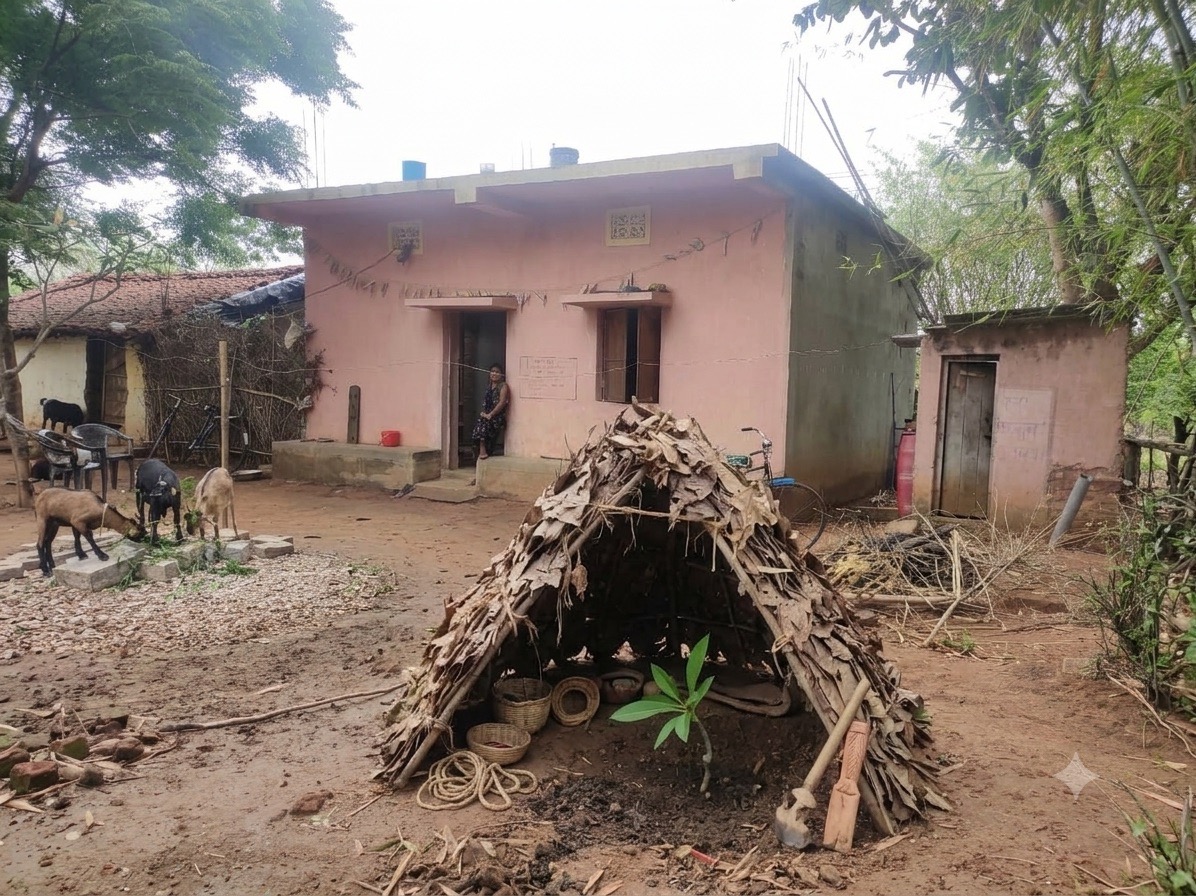
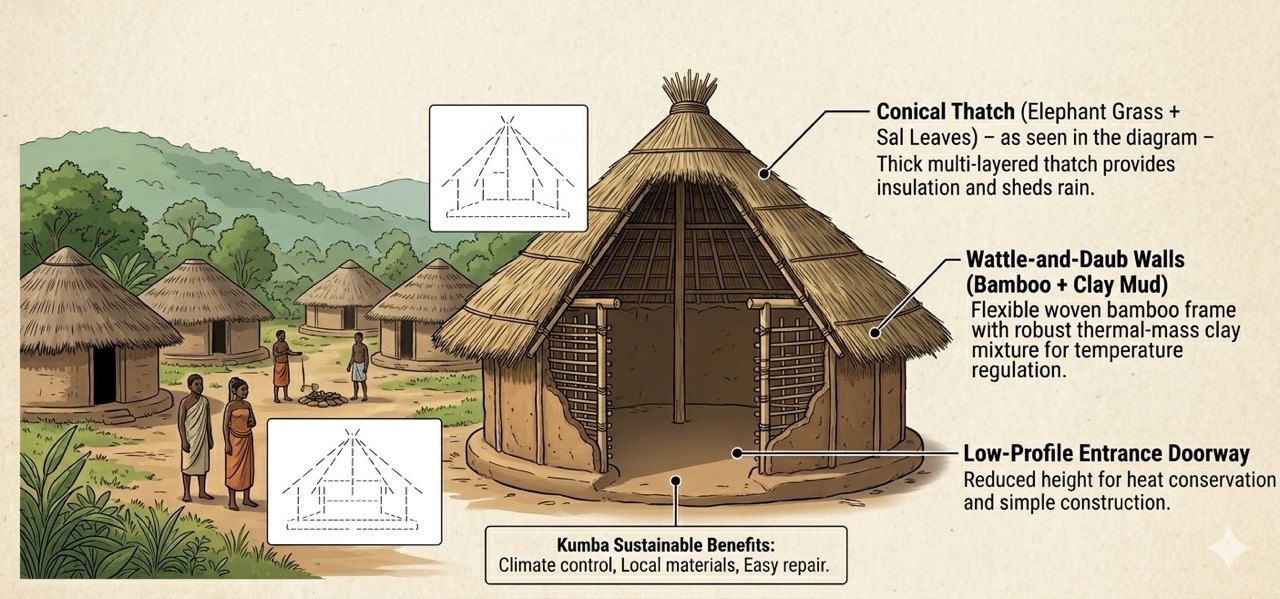
Photo 2: The Kumba reflects generations of Indigenous ecological knowledge, from climate-responsive design to the use of locally available materials. Today, only a few such structures remain in many Korwa settlements.
At the same time, the transition raises an important question. When traditional structures disappear, what happens to the knowledge embedded within them? The issue is not whether concrete houses are superior or inferior. Rather, it is whether development processes create space to recognise and learn from the knowledge systems that traditional structures embody.
Schools Without Forest Knowledge?
One of the most thought-provoking conversations during my visit concerned education.
Community members valued schooling and wanted their children to study. Yet several elders expressed concern that formal education often remains disconnected from local realities and their own identity.
Schools teach children about distant geographies, national histories, and formal curricula. These are important forms of learning and can open pathways to new opportunities. However, they often remain disconnected from local languages, Indigenous ecological knowledge, traditional governance systems, and community histories. As a result, younger generations may become increasingly educated in formal terms while becoming less familiar with the knowledge systems that have historically shaped community life.
During conversations with community members, many elders expressed concern that younger people are gradually losing fluency in their mother tongue and possess limited knowledge of traditional occupations, forest-based skills, and cultural practices that were once transmitted across generations through everyday participation in community life. This raises important questions about how education can expand opportunities while also sustaining local knowledge, cultural identity, and intergenerational learning.
This is not an argument against education and development. Rather, it is a call to rethink what meaningful education & development design might look like in Indigenous contexts.
Can schools become spaces where local knowledge and formal knowledge coexist? Can education strengthen cultural identity while also expanding opportunities?
These questions remain deeply relevant.
Development and the Politics of Knowledge
The transformations occurring within the Korwa community reflect broader development challenges across many Indigenous regions. Development interventions often begin with the assumption that solutions must come from outside experts, institutions, or technologies. While external knowledge undoubtedly has an important role to play, such approaches can overlook the knowledge, innovations, and adaptive capacities that already exist within communities.
Too often, Indigenous knowledge is viewed as something belonging to the past rather than as a living and evolving system of learning.
Yet many contemporary concerns, including climate resilience, biodiversity conservation, sustainable resource management, and community-led development, are precisely the areas where Indigenous knowledge systems have much to contribute.
The challenge is not to romanticise Indigenous communities or reject modern science. Nor is it to preserve traditional practices unchanged. The challenge is to create spaces where different knowledge systems can engage with one another respectfully and as equals.
Looking Ahead
The future of the Korwa community will not be determined by a simple choice between tradition and modernity. Such binaries rarely reflect lived realities.
Communities are constantly negotiating change, combining old and new practices, adapting to new opportunities, and responding to emerging challenges. The question before us is not whether development should reach Indigenous communities. Rather, it is whether development can recognise the knowledge that already exists within them.
As I reflected on my conversations and time in Garhwa, I was reminded that forests, houses, songs, rituals, farming practices, and community institutions are not merely cultural artefacts. They are repositories of knowledge accumulated through generations of observation, experimentation, and adaptation.
If development seeks to build more sustainable, resilient, and inclusive futures, perhaps the task is not simply to bring knowledge to communities, but also to learn from the knowledge they already hold.
In this blog, Dr. Bandyopadhyay reflects on rethinking monitoring and evaluation in development practice. Drawing on his experience with participatory networks, he explores how organisations can move beyond compliance-driven reporting towards listening, collective learning, adaptation, accountability, and cultures that enable honest reflection.
This blog, by Dr. Anshuman Karol, explores why the future of higher education depends on community-engaged research, global collaboration, and knowledge democracy. It highlights how Community-Based Participatory Research enables universities and communities to co-create solutions for today's interconnected social and environmental challenges.
EpiNet: Education, Epistemic Justice and the Knowledge Commons
.png)
.png)