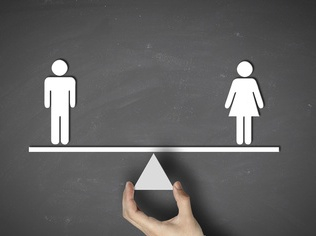
What is feminism? Who is a feminist? Can boys and men be feminists? Is women’s empowerment only women’s responsibility? On the occasion of 105th centenary of International Women’s Day, March 8 2016, let me narrate a few ordinary occurrences in the recent past: • A local college student asked her male colleague to serve water to the guests who had come for the annual function of the college, while she stood up to greet them from the podium • An illiterate rural housewife told her son to cook dinner while she accompanied her daughter to school for the entrance test • A retired IAS officer stood up to clear the plates from the lunch table while his wife was narrating an experience from her recent travels to friends These are not exceptional occurrences; they are ‘natural’ actions in everyday life. When gender stereotypes are broken, and actions contrary to those are undertaken, it becomes an expression of feminism in everyday life. There are many such illustrations of ordinary men and women, boys and girls, acting in ways that are contrary to dominant gender roles and behaviours. Such stories need to be told, and retold, several times so that feminism is not construed to be a ‘heroic’ act by a few extraordinary women and men. Yet, our newspapers, television, and advertisements, glorify and focus on a few ‘heroes and heroines’ who have struggled to succeed in a patriarchal society. By highlighting exceptional acts of a few men and women, are we not creating an impression that feminism in everyday life is not easy, and only a few can succeed? By bestowing public recognition and awards on a few exceptional women, we may be inadvertently undermining the essence of practicing feminism in everyday life. Numerous instances of feminism in everyday life can be found from your own life, everyday, when • Husbands cook and wash dishes • Wives read newspapers and sip tea • Boys watch when girls play sports • Girls ride bicycles with boys at the back • Father fasts on ‘karva chauth’ along with mother • Mother tells the daughter to study and become financially independent before marrying… The list is indeed endless, like #feminism in everyday life. On the occasion of International Women’s Day March 8, let us celebrate, promote and practice #feminism in everyday life!  

You may be interested to read

Kush Rastogi

This reflection on the Reimagining Civil Society podcast episode, “Learning for Self-Care: Preventive Health,” highlights the vital role of civil society organizations in advancing community-led health initiatives. Featuring insights from Dr. Rajesh Tandon, it emphasizes preventive healthcare, local knowledge, and grassroots action as essential pathways toward healthier, more resilient communities.

Rabi Raj

This reflective blog explores the changing realities of the Korwa, a Particularly Vulnerable Tribal Group (PVTG) in Garhwa, Jharkhand. Through conversations with community members, it examines the intersection of development, education, traditional knowledge, and cultural identity, highlighting the need to value Indigenous knowledge systems alongside modern development pathways.

Yedukrishnan V.

This blog explores mobility challenges faced by women in Vypin, Kochi, highlighting how infrastructure alone does not ensure equitable access. It underscores the need to integrate participatory approaches with implementation for inclusive and meaningful development outcomes.